The BPC-157 research catalog is a place to compare formats, not a substitute for a laboratory procurement process. A credible evaluation starts with the research question, the institutional method and the material file. Vendor rankings and visual polish cannot establish identity, content or suitability.
This guide does not name third-party sellers or direct readers to a shop. Instead, it explains the evidence a laboratory would need before considering a listing documented. The same questions apply whether the container is a dry vial, a capsule bottle, a liquid spray or a mixture.

Start with the scope of the listing
A research-use statement identifies the intended catalog context. It does not establish analytical quality, authorize human use or replace an institution’s compliance process. The listing should describe the physical form, nominal amount, salt or formulation details and the documentation available for that exact format.
A dry vial and a finished capsule are not the same analytical object. A vial may require confirmation of peptide identity, counterion and net content. A capsule adds shell and fill components. A spray adds solvent, stability and device questions. A blend adds a second identity and a quantitative ratio. A document suitable for one format may leave major gaps for another.
Ambiguous language deserves a specific follow-up. “High purity” without a method is incomplete. “Lab tested” without a report does not identify the sample. “Certificate available” is a request to inspect a document, not a reason to stop asking questions.
Connect the batch number to the container
The batch number is the link between a physical item and its records. It should be consistent across the container label, certificate and any relevant preparation or packaging record. A certificate for an unrelated lot cannot characterize the item simply because the product names match.
Traceability also needs a clear sample description. Did the laboratory test bulk peptide, a finished filled vial or a liquid taken from a bottle? A report on a raw ingredient may support that ingredient’s identity but leave final-container content unresolved. A useful material file explains the chain rather than forcing the evaluator to infer it.
Dates matter in context. A recent report is not automatically better than an older report with a clear stability record, and an older report is not automatically relevant to current stock. What matters is whether the tested sample, current material and claimed conditions are actually connected.
Read HPLC purity as a method-dependent value
HPLC separates detected components under defined conditions. A reported area percentage describes the relative signal assigned to peaks by that method. It does not automatically equal the fraction of the entire powder mass that is peptide, and it may not capture every relevant impurity.
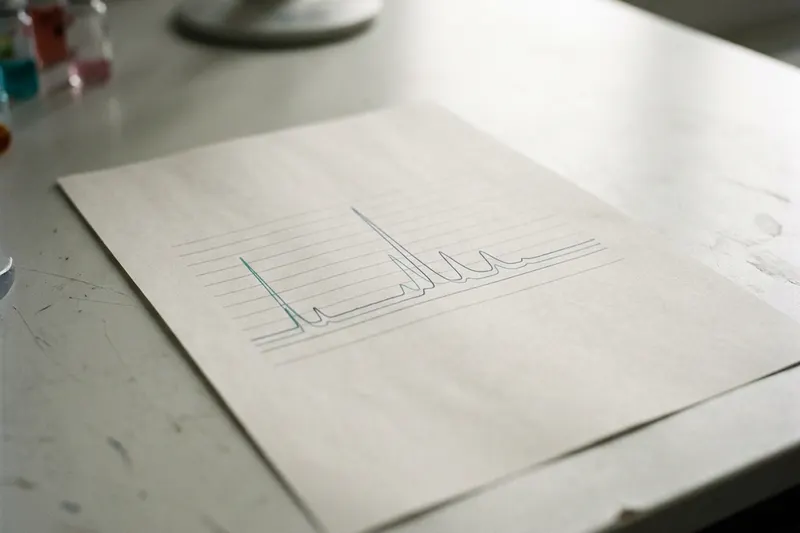
The report should identify the method well enough to make its scope understandable. A chromatogram image without sample identity, detection conditions or interpretation is weak evidence. The evaluator needs to know which peak is assigned to the target and how other signals were handled.
The proposed ≥ 99% threshold on this site is unverified and is not a measured batch value. Precision in typography should not create false precision in chemistry. The quality requirements separate a proposed acceptance standard from an actual analytical finding.
Require separate identity evidence
Mass spectrometry can support the expected molecular identity, but it answers a different question from chromatographic purity. A matching mass does not establish complete sequence confirmation, absence of every impurity or the amount in a container. The strength of the conclusion depends on the method and the sample.
For a mixture, the analytical challenge grows. Both intended components must be distinguished, and the method must explain how their signals relate to the claimed formulation. A second peak is not necessarily an impurity, while two visible peaks are not proof that the correct two peptides are present.
The BPC-157 and TB-500 comparison explains why an unspecified fragment cannot inherit the identity of full-length thymosin beta-4. Naming conventions are not a replacement for a molecular specification.
Ask what the content claim actually measures
Net peptide content is not the same as gross powder mass. Water, counterions and excipients can contribute to a lyophilized cake. A small vial with a large-looking cake may contain less peptide than its appearance suggests. Photographs cannot resolve that uncertainty.
A content claim should state the relevant basis and analytical scope. Is the number nominal fill mass, measured peptide content or a calculation from a preparation record? Those descriptions are not interchangeable. Finished capsules need a method that accounts for their matrix; liquids need a defined volume and concentration basis.
Only after those inputs are established does the concentration-math guide become useful. Dividing an uncertain mass by a precise volume produces a precise-looking estimate, not a measured concentration.
Evaluate packaging without inventing transport certainty
Domestic and overseas sourcing raise practical questions about documentation, communication and transport records. Geography alone does not establish analytical quality. A domestic address is not a certificate, and an overseas origin is not by itself an analytical finding.
A laboratory would examine what transport conditions were specified, what evidence supports them and how the material was received. An insulated mailer or cold pack in a photograph is not a temperature record. No shipping duration or cold-chain performance is claimed for this catalog.
Receipt procedures can document container condition, label consistency and any discrepancies. Those records do not replace chemical analysis, but they preserve observations that may matter later. A complete procurement decision considers packaging as one part of the material file rather than a visual trust signal.
Recognize the important red flags
Watch for mismatched batch identifiers, certificates with missing methods, purity language that changes meaning between pages, and product images presented as analytical evidence. A listing that confuses ingredient purity with finished-formulation content is not answering the right question.
Broad biological promises are another reason to pause. Chang et al. (2011) examined rat tendon and fibroblast preparations. That paper does not verify a seller, a vial or human efficacy. A citation can be real while the claim attached to it is too broad.
A transparent limitation is more useful than an unsupported assurance. On this site, prices, counts and proposed thresholds remain visibly unverified. Those limitations should remain apparent at the point where a reader makes a decision.
Keep regulatory status in its own category
BPC-157 is not FDA-approved for any use. The FDA page currently places it among nominated-but-withdrawn substances, previously in Category 2, with immunogenicity, impurity and insufficient human-safety-information concerns. The WADA list identifies BPC-157 in S0 as prohibited at all times. Neither laboratory labeling nor online availability changes those facts.
The legal-status article explains why compounding discussions, research-material sales and anti-doping rules are separate questions. Jurisdiction and institutional requirements matter. This guide is not legal advice.
Build a decision record, not a collection of screenshots
A useful procurement assessment records which documents were available, what each one established and which questions remained unanswered. Screenshots can preserve a listing, but they should not replace the complete analytical report or its context. The decision record should distinguish a supplier statement from an independently examined document.
Unresolved discrepancies deserve a clear status. If the certificate describes one batch while the container describes another, the record should say that the connection is missing. It is better to preserve an explicit gap than to create a narrative that makes separate records appear consistent. That discipline also makes later corrections easier to evaluate.
Buying and vetting questions
Is a COA enough on its own?
No. Its usefulness depends on the sample, method, traceability and analytical scope. A generic certificate may leave final-container content or formulation questions unanswered. The evaluator needs to understand what the report actually characterizes.
Can a photograph establish net content?
No. Cake size, bottle fullness and capsule appearance do not quantify peptide. A measured content claim requires appropriate analytical evidence. Nominal label values should remain distinct from verified measurements.
Does domestic sourcing establish quality?
No. Location is relevant to logistics and documentation access, but it does not establish identity or purity. The same batch-specific questions apply regardless of origin, and transport claims need supporting records.
Where should research claims be checked?
At the primary paper and its actual experimental design. The research overview helps distinguish a cell or animal observation from a human conclusion and from a claim about a catalog product.
Related products
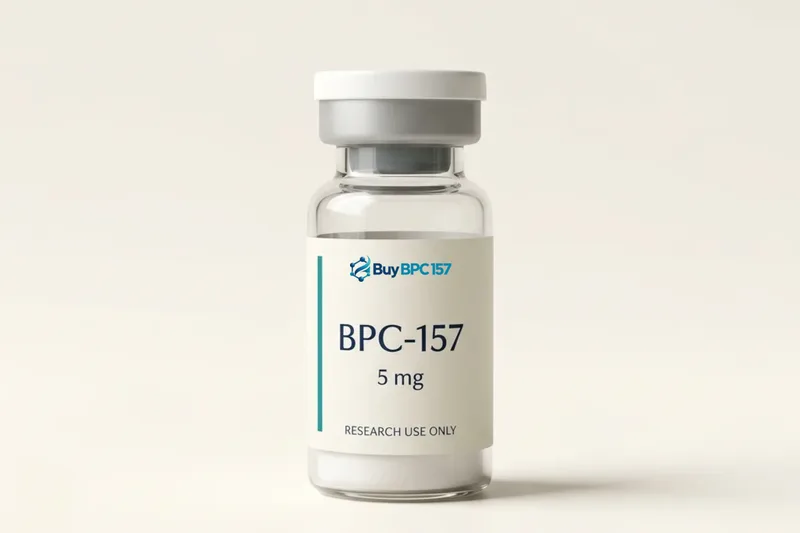
BPC-157 5mg Vial
Lyophilized powder · 5 mg
$38.50 Unverified illustrative price
COA required · ≥ 99% purity standard Proposed, unverified threshold
View product details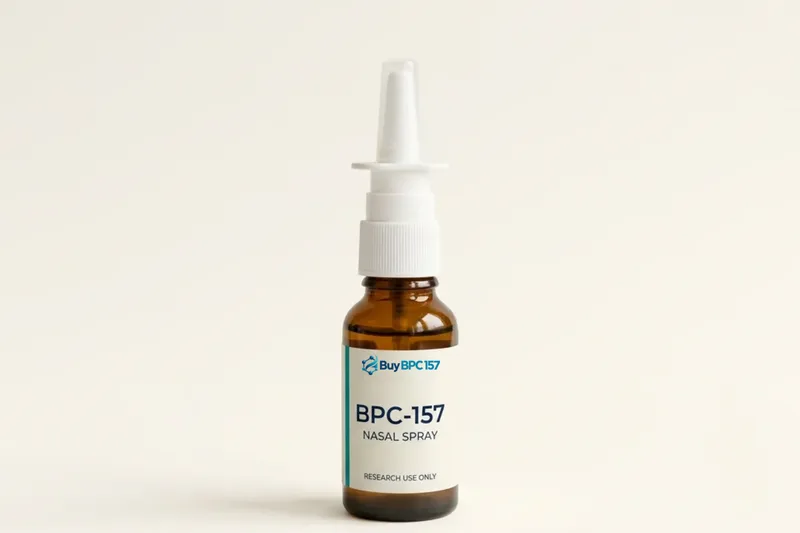
BPC-157 Nasal Spray
Metered spray · 10 mg / 10 mL
$56.50 Unverified illustrative price
COA required · ≥ 99% purity standard Proposed, unverified threshold
View product details