The BPC-157 + TB-500 blend listing describes a proposed two-component format. It does not establish a combined biological effect. Before asking why two names appear together, a researcher needs to establish what each name means and what evidence belongs to each material.
BPC-157 has a defined 15-amino-acid sequence in the catalog. TB-500 is described here as a synthetic thymosin beta-4 fragment, with the exact fragment specification still unverified. That distinction is not a small technicality. A fragment cannot automatically inherit the structure, properties or study findings of the full-length molecule.
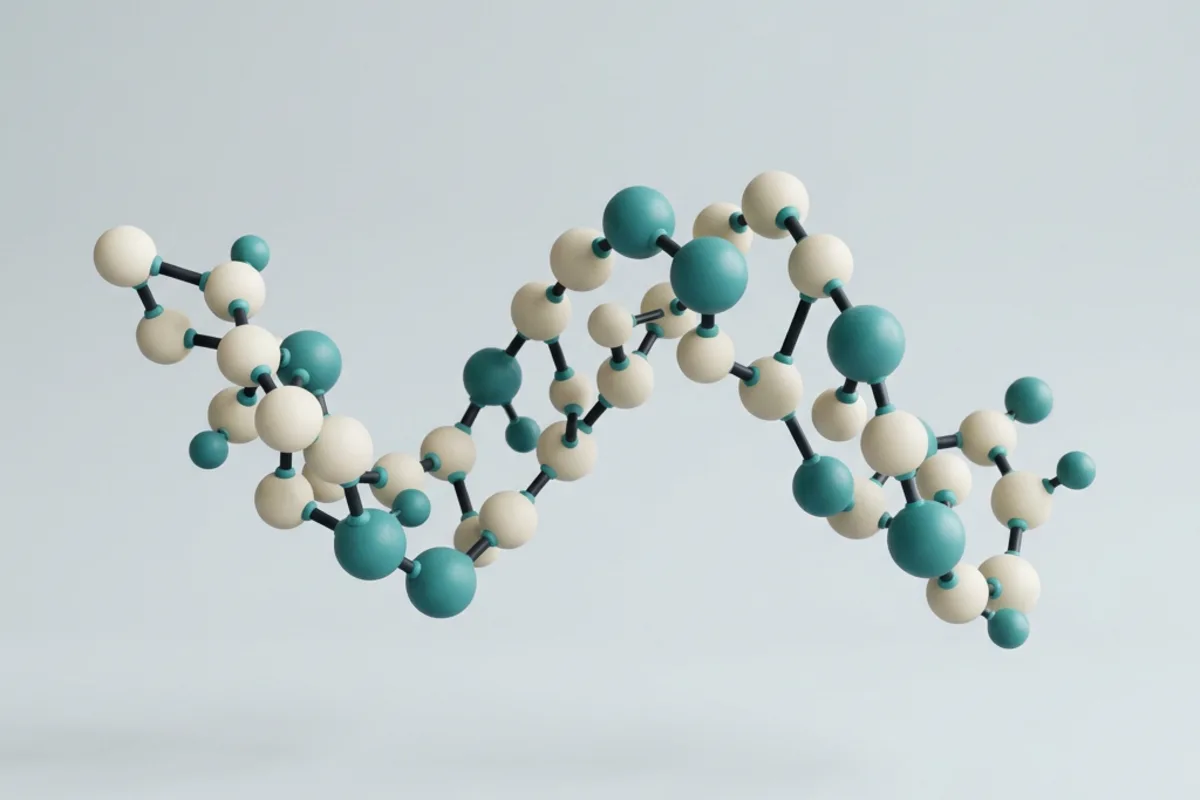
BPC-157 starts with a defined short sequence
BPC-157 is a 15-amino-acid peptide fragment associated with Body Protection Compound research. Its listed sequence is Gly-Glu-Pro-Pro-Pro-Gly-Lys-Pro-Ala-Asp-Asp-Ala-Gly-Leu-Val. The peptide formula is C62H98N16O22, with an approximate molecular weight of 1419.5 g/mol. Salt form and water content are separate analytical considerations.
Those identifiers establish the intended molecular target for a material file. They do not establish that a particular vial contains it, how much is present or what impurities accompany it. Identity and content remain batch-specific questions even when the sequence itself is familiar.
The research overview places the sequence in the context of the published program. It distinguishes the chemical identity from proposed pathways and from observations in particular experimental models.
TB-500 requires a fragment-specific description
Thymosin beta-4 and a synthetic fragment derived from it are not interchangeable labels. A report about the full-length peptide must be read as a report about that material unless it explicitly examines a fragment. The exact sequence and molecular specification of a fragment determine which analytical evidence is relevant.
This catalog does not invent a TB-500 sequence, formula or molecular weight. The blend listing marks the fragment identity as unverified. A documented listing would need to resolve that identity before presenting a component-specific mass or analytical interpretation as established.
This restraint prevents a common comparison error: taking a well-described full-length molecule, attaching its properties to a less precisely specified commercial name and then treating the resulting comparison as chemically exact. The first task is identification, not ranking.
Research models answer bounded questions
Chang et al. (2011) examined BPC-157 in cultured rat Achilles tendon and tendon fibroblast preparations. The experimental setting is central to interpreting the paper. Observations in those preparations do not establish a human outcome, and they do not characterize a two-component blend.
The broader BPC-157 literature discusses gastrointestinal, connective-tissue, muscle and vascular questions in preclinical settings. Each paper needs to be read for material identity, model, route, controls and endpoint. A broad topic label is not a shared experimental method.
For thymosin beta-4-related research, the same discipline applies with an additional identity check: was the material full-length thymosin beta-4 or a defined fragment? Without that answer, a comparison may be matching different molecules while using similar names. No fragment-specific mechanistic claim is asserted here without an identified source.
Proposed mechanisms are not product specifications
Mechanistic discussions attempt to explain an observation within a model. They can guide new questions, but they do not establish a universal effect. A proposed pathway is not a certificate of identity, a content assay or a claim that a catalog vial will behave in the same way.
A comparison becomes misleading when several proposed mechanisms are listed side by side and treated as cumulative evidence for a blend. Even if each mechanism were supported in its original experiment, the combined material would still need an appropriate experimental design.
In this guide, the absence of a fragment-specific source is left visible rather than filled with borrowed full-length claims. That is a stronger basis for a research question: it identifies the missing evidence instead of concealing it beneath a confident explanation.
Why researchers might compare the two
Researchers can have a legitimate reason to compare compounds discussed in overlapping biological areas. A comparison can ask whether two characterized materials behave differently in the same model or whether one observation is specific to a preparation. That is a hypothesis, not a conclusion about a catalog blend.
A combined-material experiment introduces additional questions. Does the mixture alter the stability or measurement of either component? Can an analytical method distinguish them? Are the component amounts known? Does the experimental design include each individual component and a suitable control?
Without those controls, an observed difference cannot be assigned confidently to an interaction. It may reflect one component, unequal content, formulation effects or an uncontrolled variable. “Combined in research” should describe a study design, not serve as a shortcut to a claim of synergy.
A blend needs a different analytical explanation
For a single intended peptide, a chromatogram may be interpreted around one assigned target peak. For a blend, more than one peak may be intended. The report must explain which signals belong to each component and how unrelated signals were classified.
Peak area alone may not establish mass ratio, especially when components have different detector responses. A nominal equal-mass label is not a measurement. Component-specific quantitative evidence is needed before the ratio can be treated as a documented property of the vial.
The quality requirements distinguish identity, relative purity and net content. The vetting guide adds questions about sample traceability. A certificate for each ingredient is useful but does not automatically characterize the finished mixture.
Total-mass arithmetic cannot separate components
The calculator accepts one mass and one volume. If total nominal blend mass is entered, the output is total nominal mass per volume. It does not know how much of each component is present and cannot infer a ratio from a product name.
Separate component concentrations require verified individual masses. For example, an equal-mass label concept remains only an assumption until supported. The preparation guide explains why calculated values must retain the assumptions behind their inputs.
Even verified starting masses do not remove stability and transfer questions. A prepared mixture may need its own analytical confirmation. The arithmetic is simple precisely because it leaves those physical and chemical variables outside the model.
Storage evidence should concern the mixture
General cold, light-protected handling may be appropriate as a laboratory consideration for lyophilized material. It is not evidence that a two-component preparation has the same stability as either isolated component. Mixture-specific information matters, especially after solvent is added.
No temperature or duration is established for the unverified blend listing. A laboratory would need a relevant stability basis, an approved procedure and traceable preparation records. Borrowing an expiry from a single-compound page would conceal an unresolved question rather than answer it.
Container identity also matters when comparing single-component controls with the blend. Differences in solvent, storage or preparation history can confound an experimental comparison. A clean design keeps those variables explicit.
WADA status is clear and separate
The WADA Prohibited List identifies BPC-157 under S0 and TB-500 under S2, both prohibited at all times. A laboratory-use label does not remove that sports-code status, and combining the compounds does not create an exception.
BPC-157 is not FDA-approved for any use. The FDA safety-risk page describes its nominated-but-withdrawn history and concerns. The regulatory guide separates these issues from research-material characterization and explains why jurisdiction-specific advice requires an appropriate authority.
A comparison should preserve unknowns
A table can make two materials look more directly comparable than the evidence allows. If one component has a defined sequence and another has an unresolved fragment specification, the missing field should remain unresolved. Filling it with a familiar full-length value would make the table look complete while making the comparison less accurate.
The same rule applies to biological evidence. A blank study-specific field is preferable to a broad mechanistic phrase borrowed from a different model. Good comparison writing makes the asymmetry of the evidence visible rather than smoothing it away.
Comparison questions
Are BPC-157 and TB-500 the same peptide?
No. BPC-157 is the listed 15-amino-acid peptide. TB-500 is described here as a synthetic thymosin beta-4 fragment, whose exact specification must be verified. Similar research topics do not make the molecular identities equivalent.
Does a blend establish synergy?
No. Synergy is a specific experimental conclusion requiring an appropriate design and analysis. A product name, equal-mass concept or two separate papers does not establish an interaction between the compounds.
Can full-length thymosin beta-4 findings be assigned to TB-500?
Not automatically. A fragment has its own identity and evidence requirements. The actual material in a study must match the material being discussed before a finding can be interpreted as directly relevant.
Why is the blend ratio marked unverified?
The nominal component masses are placeholders, not quantitative assays. Actual content and ratio require batch-specific evidence. The catalog makes that gap visible rather than presenting an assumed formulation as measured data.
Related products
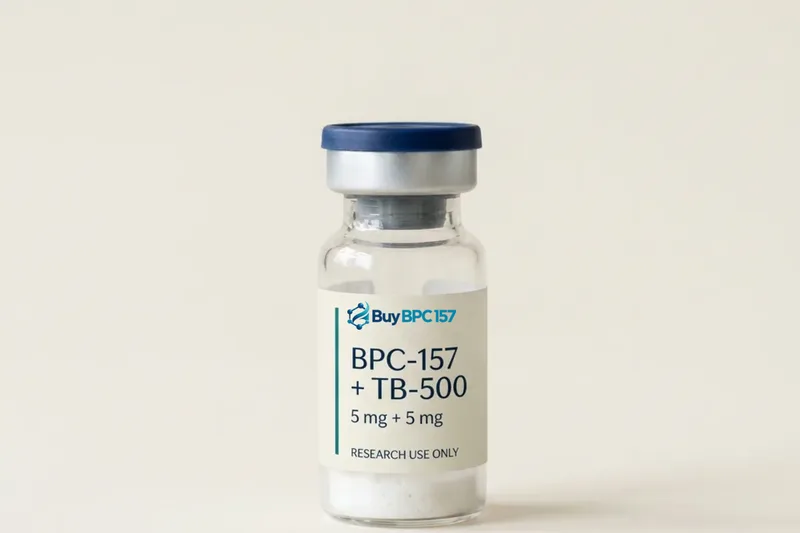
BPC-157 + TB-500 Blend
Lyophilized powder · 5 mg + 5 mg
$86.50 Unverified illustrative price
COA required · ≥ 99% purity standard Proposed, unverified threshold
View product details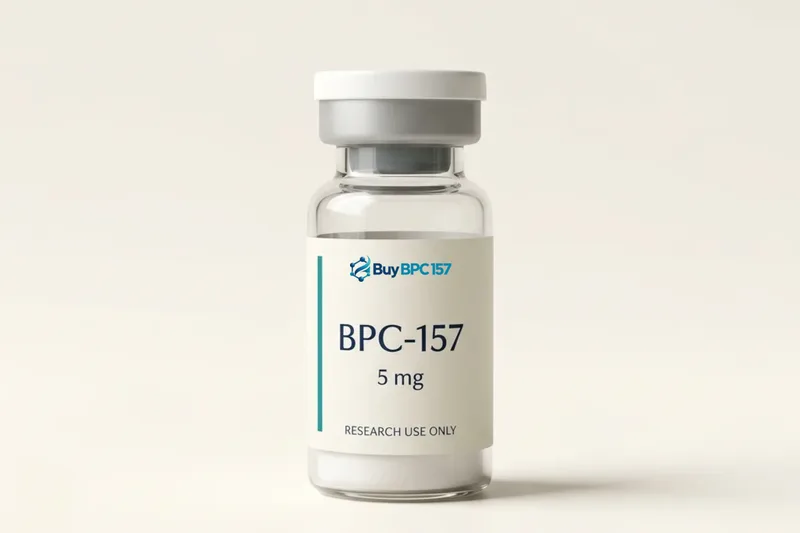
BPC-157 5mg Vial
Lyophilized powder · 5 mg
$38.50 Unverified illustrative price
COA required · ≥ 99% purity standard Proposed, unverified threshold
View product details