Buy BPC 157 organizes research formats and educational material around a short peptide with a much broader online narrative. BPC-157 is a 15-amino-acid peptide fragment associated with Body Protection Compound research. Its name is not evidence that a catalog item matches a study preparation.
The nominal 5mg vial is one container format, not a statement about a suitable experimental amount. This guide explains chemical identity, the research program and the distinction between preclinical observations and established human efficacy. It does not provide personal-use instructions.

The origin of the name and research program
BPC refers to Body Protection Compound. The peptide is discussed in literature associated with a gastric-juice protein research program and a stable gastric pentadecapeptide. The phrase describes the history of the research, not a guarantee about what a manufactured preparation will do.
The Sikirić research program is a prominent part of that literature. Sikirić and colleagues (2018) discuss the stable gastric pentadecapeptide across several experimental questions. A broad synthesis can help map a field, but individual claims still need to be checked against the underlying model and methods.
Origin language can easily become overstated. Association with a gastric protein does not establish that every marketed formulation reproduces a naturally occurring preparation, and a synthetic research material needs its own analytical characterization. A history of investigation is not a certificate for a vial.
The sequence defines the intended peptide
The listed sequence is Gly-Glu-Pro-Pro-Pro-Gly-Lys-Pro-Ala-Asp-Asp-Ala-Gly-Leu-Val. The peptide formula is C62H98N16O22 and the approximate molecular weight is 1419.5 g/mol. The CAS identifier used in the catalog is 137525-51-0. These values describe the intended peptide identity.
Salt form, residual water and any excipients are separate questions. Acetate is a typical supplied form, but an actual batch needs confirmation. Gross powder mass may include more than peptide. The distinction becomes important when a nominal mass is used to calculate concentration.
A sequence printed on a webpage does not demonstrate that the physical material has that sequence. The quality requirements call for traceable identity evidence and a clear analytical scope. A material file should make the connection between the intended molecule and the tested sample explicit.
Preclinical models are not a single body of proof
Preclinical research includes different kinds of models: cultured cells, isolated tissues and animal experiments. Each can answer a bounded question under particular conditions. They differ in complexity, controls, endpoints and the kinds of inference they permit.
A cell observation may suggest a pathway worth investigating. An animal observation may address a more integrated experimental response. Neither becomes a human conclusion simply because the same compound name appears in both. Reproducibility, study design and independent confirmation remain relevant.
The online phrase “the research says” often hides these distinctions. A useful account identifies the material, model, comparison and measured endpoint. Without those details, an apparently specific claim may be little more than a topic label.
Gastrointestinal questions belong to their actual models
Gastrointestinal models are part of the broader gastric pentadecapeptide literature discussed by Sikirić and colleagues. Their relevance depends on the actual experimental preparation, endpoint and conditions. A general statement that a field has been investigated does not establish a universal effect.
The name’s gastric association is not a reason to assume that an oral capsule has a documented human property. Route, formulation and analytical identity are separate variables. A capsule shell and excipient matrix introduce questions not answered by the peptide sequence alone.
This guide therefore does not assign gastrointestinal findings to the catalog’s unverified capsule format. It uses the field as context and directs attention back to primary papers for any specific observation. That is a more accurate description than converting a research area into a product promise.
The tendon and fibroblast paper is a specific example
Chang et al. (2011) examined cultured rat Achilles tendon and tendon fibroblast preparations. The rat tissue and cell context is essential. The paper is not a human efficacy trial and does not establish a personal-use amount.
It also does not validate a catalog item. The tested preparation, analytical characterization and experimental conditions belong to the paper. A product with the same name cannot inherit that evidence without demonstrating that the relevant material and method questions have been addressed.
This example illustrates a broader reading habit: the title and abstract are starting points, not permission to generalize. A careful reader examines what was compared, what was measured and what the design cannot establish before using the paper in a wider argument.

Muscle and vascular topics require the same care
Muscle and vascular questions appear within broader discussions of the BPC-157 research program. Those headings identify areas of investigation, not a single demonstrated outcome. Any specific claim needs its own primary study, with the model and endpoint stated rather than implied.
A mechanism discussed in one tissue does not automatically establish the same behavior in another. A pathway can be relevant to multiple systems while the experimental evidence remains local to a model. Broad mechanistic language should not erase those limits.
This edition does not build an inventory of unsupported pathway claims. It points to the research program and a verified example, while leaving study-specific conclusions to the source. The comparison guide applies the same discipline when a different peptide family is introduced.
Proposed mechanisms are hypotheses with context
A proposed mechanism attempts to explain why an observation occurred. It can organize follow-up work and suggest additional measurements. It does not by itself establish reproducibility across settings, a clinical effect or the behavior of a finished formulation.
Mechanistic explanations can become especially misleading when stacked together. A long list of pathways may sound like stronger evidence, even when each item comes from a different model or an interpretive discussion. The number of proposed mechanisms is not a substitute for the strength of a study design.
For this reason, the guide does not present pathway names as product specifications. A laboratory selecting material should first establish identity and content, then evaluate whether a published method actually addresses its research question.
Human evidence should be described without absolutes
It would be inaccurate to claim that no human research of any kind exists simply because the preclinical literature is larger. The more defensible distinction is between limited human evidence and established efficacy. Those are not equivalent categories.
This guide does not identify a completed, adequate human efficacy trial that substantiates the catalog or any personal-use claim. It also does not interpret a small or limited human report as proof of general safety. The scope and limitations of each study matter more than the mere presence of human participants.
The FDA safety-risk page identifies insufficient human safety information alongside immunogenicity and impurity concerns. Those concerns remain relevant even when a discussion of the literature acknowledges limited human evidence.
Formulation and route create additional evidence gaps
A dry vial, capsule and nasal spray are different preparations. A route-specific claim needs a relevant study of the actual type of material and delivery. It cannot be established by citing an unrelated cell experiment or assuming that the peptide name determines absorption.
Intranasal BPC-157 delivery research is thin compared with the wider preclinical literature. The catalog’s spray listing therefore does not claim route performance. Capsule composition, pump behavior and blend ratio likewise remain separate documentation questions.
The vetting guide explains those material-file differences. The preparation article explains why even a correct concentration calculation does not establish actual content or suitability.
Research context does not change regulatory status
BPC-157 is not FDA-approved for any use. The FDA page currently describes it among nominated-but-withdrawn substances, previously in Category 2. The legal-status guide explains that update and the limits of the verified 2026 advisory materials.
The WADA Prohibited List identifies BPC-157 under S0 as prohibited at all times. Research labeling does not alter sports rules. Nor does an analytical certificate supply a regulatory authorization.
Keeping those categories distinct makes a research summary more useful. The molecule, the batch, the model and the regulatory framework each answer a different question. A responsible account does not let certainty in one category spill into another.
Research questions
What does pentadecapeptide mean?
It means a peptide containing fifteen amino acids. The term describes sequence length, not biological efficacy, purity or the amount in a container. An actual material still needs identity and content documentation.
Does the rat tendon study establish a human effect?
No. Chang et al. used rat tendon and fibroblast preparations. The model’s observations are not a human efficacy conclusion and do not validate a commercial product, route or amount.
Is limited human evidence the same as no human research?
No. Those statements have different meanings. Limited evidence should be described with its scope and limitations, without turning it into established efficacy or incorrectly claiming that no human investigation exists.
Can one route inherit another route’s evidence?
Not automatically. Formulation, delivery and material identity matter. A spray or capsule needs relevant evidence rather than a citation to an unrelated preparation. The catalog leaves those uncertainties explicit.
Related products
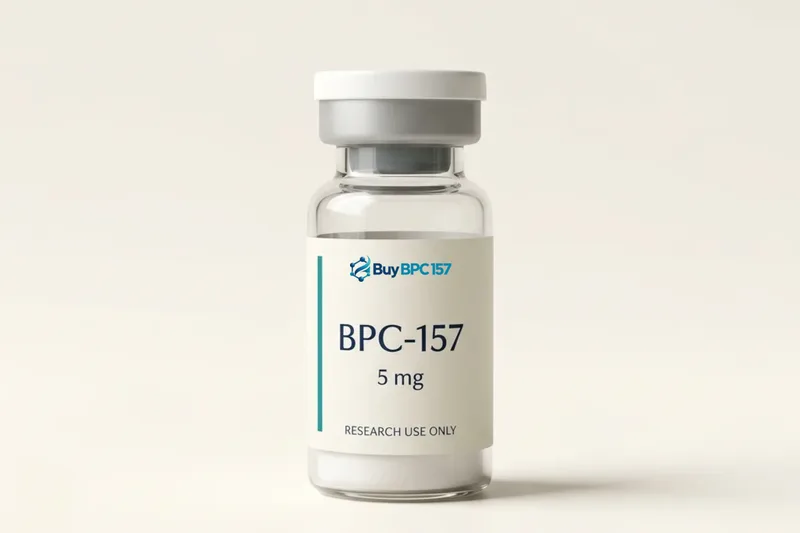
BPC-157 5mg Vial
Lyophilized powder · 5 mg
$38.50 Unverified illustrative price
COA required · ≥ 99% purity standard Proposed, unverified threshold
View product details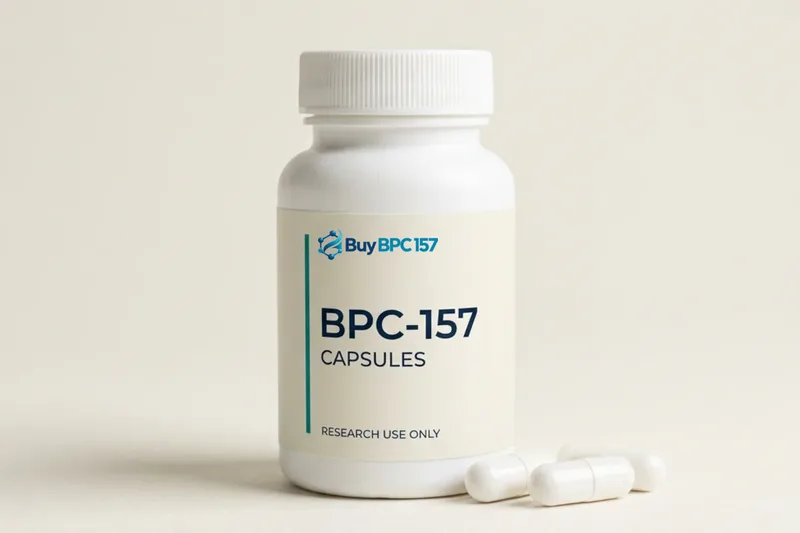
BPC-157 Capsules
Capsules · 500 mcg × 60
$78.50 Unverified illustrative price
COA required · ≥ 99% purity standard Proposed, unverified threshold
View product details