The BPC-157 reconstitution calculator performs unit conversions. It does not select a solvent, prescribe a target amount or validate a preparation. This article explains the distinction between laboratory reconstitution and the arithmetic that describes a nominal solution.
Nominal 5mg and 10mg vial formats provide different mass inputs, not different protocols. A laboratory establishes its procedure through an authorized method, material documentation and institutional requirements. The discussion below is third person and is not an instruction for personal use.
Define reconstitution before choosing numbers
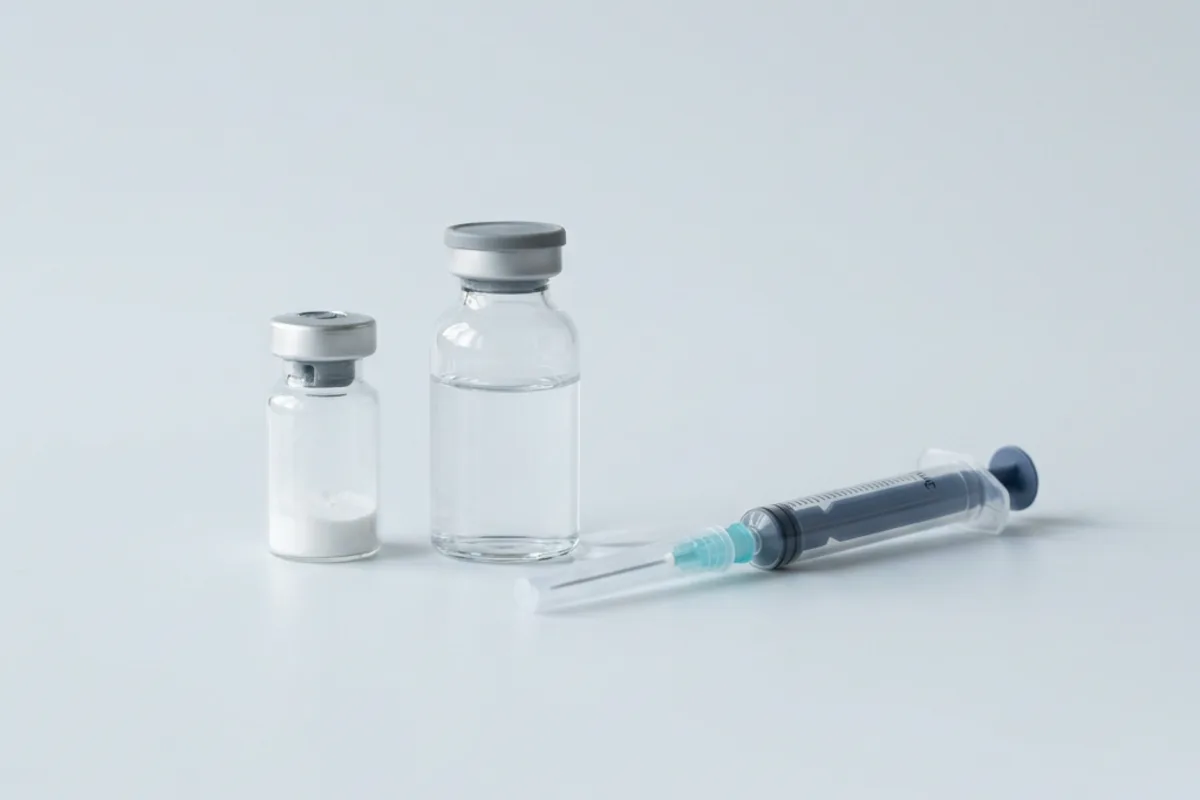
Reconstitution is the preparation of a dry material in a specified solvent. In a laboratory, the method defines the material, solvent, container, measurement approach and conditions. The calculation then describes the nominal relationship between peptide mass and liquid volume.
That relationship is not a measurement of the resulting concentration. It assumes the mass is correct, the volume is known and the relevant material has entered solution. If those assumptions are uncertain, the calculated value remains uncertain even when the calculator displays several decimal places.
A useful preparation record therefore separates label claims, measured quantities and calculated quantities. “Nominal 5 mg” is a label basis. “Two milliliters added” is a volume record with measurement limitations. “2,500 mcg/mL” is a calculation under stated assumptions. None of those phrases should silently become “analytically verified concentration.”
The materials belong to the method
A laboratory preparation record identifies the peptide batch, solvent identity and lot, receiving container and relevant measuring equipment. It also identifies the authorized procedure and the person or system responsible for its execution. This is a traceability framework, not a shopping list supplied by this site.
Solvent compatibility must be established independently. Bacteriostatic water appears in common arithmetic examples, but its preservative content may matter to an assay. A solvent appropriate in one experiment is not automatically appropriate in another. This article does not choose a solvent or establish microbiological properties.
The container can introduce additional questions. Material may interact with surfaces, and transfers can change the amount remaining. A simple calculator assumes no such loss. The method and analytical plan need to address those variables when they matter to the research question.
What a documented preparation sequence records
In an authorized laboratory workflow, material identity and method compatibility are established before a preparation begins. The record connects the dry material to its batch documents and states the intended analytical basis. This step prevents a nominal product name from standing in for a verified material specification.
The preparation stage records solvent identity, measured volume, container and relevant observations under the laboratory’s approved procedure. The article intentionally does not specify manipulation technique, personal administration or a target amount. Those are not decisions a public arithmetic guide can validate.
The final record distinguishes the prepared container from the original vial. It preserves the calculated concentration, the assumptions behind it and any analytical confirmation. Storage conditions and an allowable working window should be supported for that actual preparation, not borrowed from a generic peptide statement.
Keep the unit conversion explicit
One milligram equals 1,000 micrograms. Concentration in micrograms per milliliter is therefore nominal milligrams multiplied by 1,000 and divided by milliliters. Writing the units beside each number is a practical defense against errors that arise when a symbol is omitted.
A U-100 scale has 100 units per milliliter. One unit is 0.01 mL; it is a volume marking, not a fixed peptide mass. The mass represented by that marking changes with concentration. “Units” without the scale and solution context is an incomplete description.
A target amount is an independent input, not a value derived from the product name. The calculator leaves it blank until supplied. Any target must come from a separately established research method. This site does not select an experimental amount or provide an amount for human or veterinary use.
A worked example with stated assumptions
As arithmetic only, suppose the nominal mass is 5 mg and the specified solvent volume is 2 mL. Five milligrams converts to 5,000 micrograms. Dividing by two gives a nominal concentration of 2,500 mcg/mL. On a U-100 scale, 0.01 mL corresponds mathematically to 25 mcg under those assumptions.
For an arbitrary illustrative target of 125 mcg, the calculated volume is 125 divided by 2,500, or 0.05 mL. Multiplying by 100 gives five U-100 units. Dividing total nominal mass by the illustrative target gives forty theoretical draws. These numbers explain the formula, not an appropriate amount for an experiment or a person.
The theoretical count ignores dead volume, transfer loss and incomplete dissolution. A fractional count is a mathematical ratio, not a guarantee of complete usable draws. A target exceeding the total mass is impossible within the model, and a volume greater than one milliliter exceeds a one-milliliter device.
Storage after preparation needs its own evidence
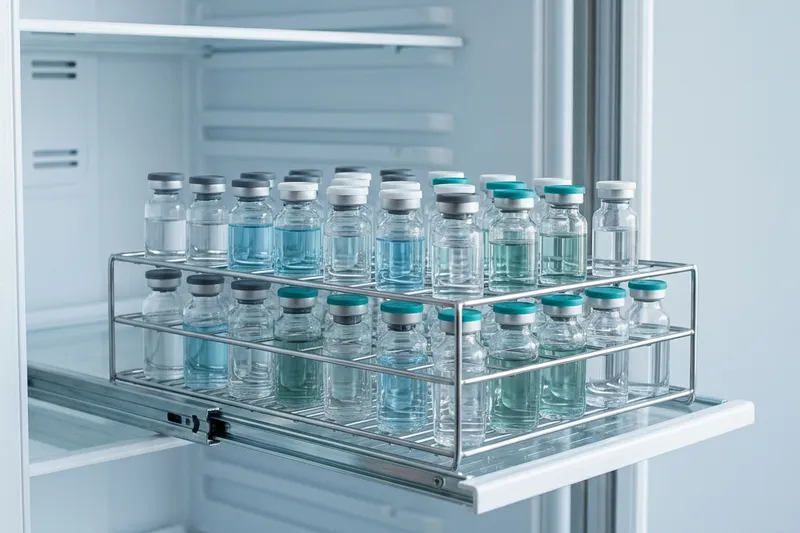
General guidance for lyophilized peptides includes cold, light-protected storage. Once solvent is added, the preparation becomes a different stability question. Solvent, concentration, container and exposure history can all matter. Refrigeration and a limited working window are general considerations, not an established expiry for an unverified batch.
No exact temperature or day count is asserted here. A validated window would need evidence relevant to the actual preparation and conditions. A statement about unopened dry material cannot automatically establish the stability of a repeatedly accessed liquid.
The quality standard asks for clarity about the sample and analytical scope. That clarity is equally important in stability records. An institution should be able to distinguish original material, prepared solution and transferred portions rather than assigning all of them the same generic identifier.
Common errors are often errors of interpretation
A milligram-to-microgram mistake creates a thousandfold discrepancy. Confusing volume units with peptide mass creates a different but equally basic problem. The formula should carry units all the way through rather than relying on a familiar-looking number.
A subtler error is treating HPLC purity as net peptide content. Relative peak area is not automatically the fraction of gross cake mass that is peptide. Water, counterions and excipients can affect the relationship. The material-vetting guide explains why those records must be separated.
Another error is assuming a blend can be described by a single total-mass concentration. The total may be mathematically useful, but individual component concentrations require verified component content. The comparison guide explains why exact fragment identity and ratio matter.
Research and regulatory boundaries remain separate
Chang et al. (2011) used a defined rat tendon and fibroblast experimental setting. A public calculator does not reproduce that method or validate material for it. The research overview explains why a paper’s model cannot be generalized into personal-use instructions.
BPC-157 is not FDA-approved for any use. The FDA safety-risk page identifies concerns and its nominated-but-withdrawn history. The WADA list identifies BPC-157 as prohibited at all times under S0. Preparation arithmetic changes neither status. The legal guide links the relevant primary sources.
Report uncertainty alongside the nominal value
A preparation record can state a calculated concentration while also explaining its limitations. The mass may be nominal rather than assayed; the added volume may have a measurement tolerance; the calculation may exclude residual liquid or losses during transfer. Those qualifications are part of the value’s meaning, not optional fine print.
When an experiment compares multiple preparations, consistency of the calculation basis matters. One record based on gross powder mass and another based on net peptide content can produce misleading comparisons even if both arithmetic operations are correct. A laboratory should be able to identify which basis was used before interpreting a difference between samples.
This is why the tool does not certify its output. Its role ends at the conversion. Analytical confirmation, uncertainty assessment and acceptance under an authorized method remain separate responsibilities.
Reconstitution questions
Is this a laboratory protocol?
No. It explains records and arithmetic in third person. A laboratory needs its own authorized procedure, compatibility assessment and material documentation. The article does not specify a personal-use technique or select an amount.
Why is actual content important?
A nominal calculation depends on the entered mass. If the mass is not established, the output is an estimate under an uncertain assumption. Analytical content and relative chromatographic purity are not interchangeable.
Does refrigeration establish a use window?
No. A window needs stability evidence for the actual preparation, container and conditions. General storage language cannot supply a validated duration, and this site does not assert one.
Can more decimal places improve the preparation?
No. Additional digits describe the arithmetic more finely but do not reduce uncertainty in content, volume or losses. A meaningful record states assumptions and measurement limitations rather than hiding them behind precision.
Related products
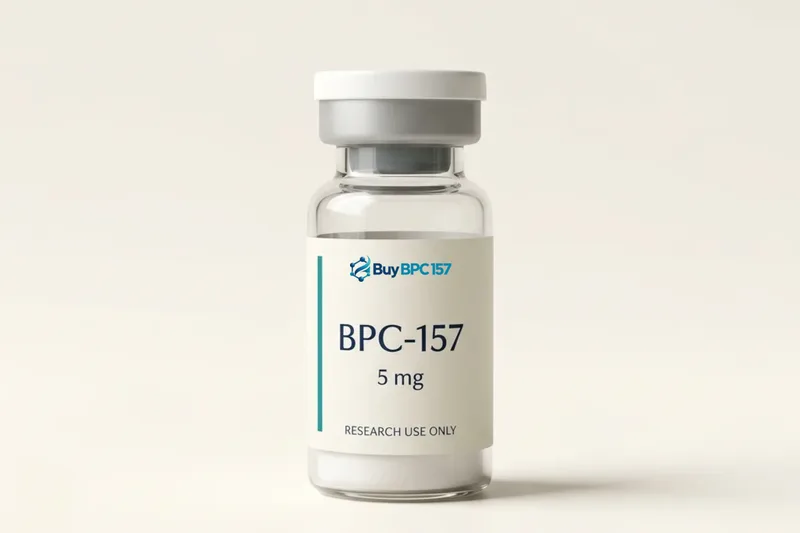
BPC-157 5mg Vial
Lyophilized powder · 5 mg
$38.50 Unverified illustrative price
COA required · ≥ 99% purity standard Proposed, unverified threshold
View product details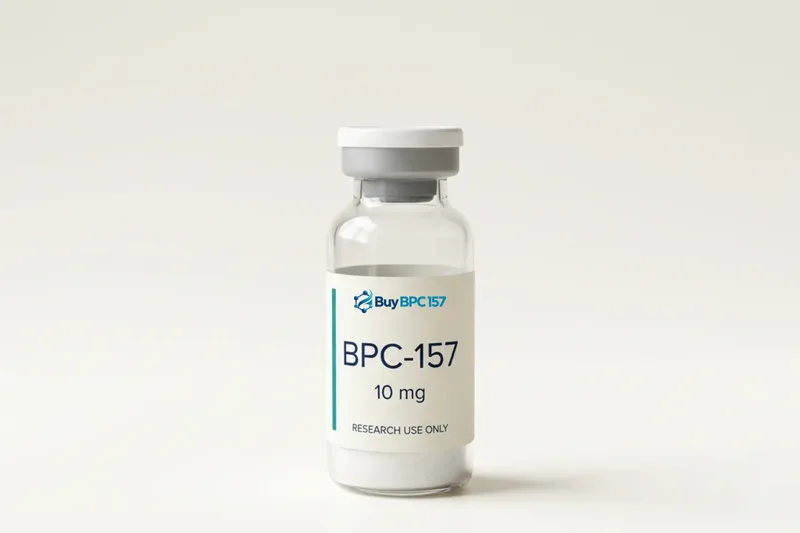
BPC-157 10mg Vial
Lyophilized powder · 10 mg
$64.50 Unverified illustrative price
COA required · ≥ 99% purity standard Proposed, unverified threshold
View product details