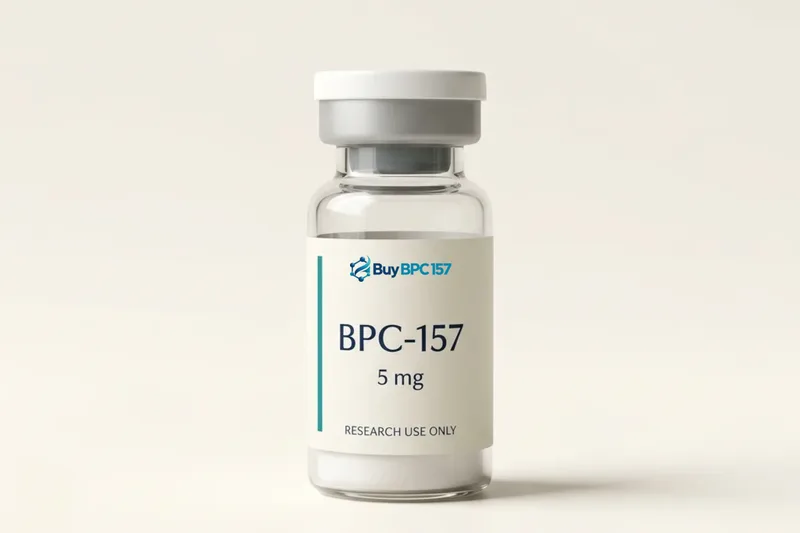
BPC-157 5mg Vial
Lyophilized powder · 5 mg
$38.50 Unverified illustrative price
COA required · ≥ 99% purity standard Proposed, unverified threshold
View product details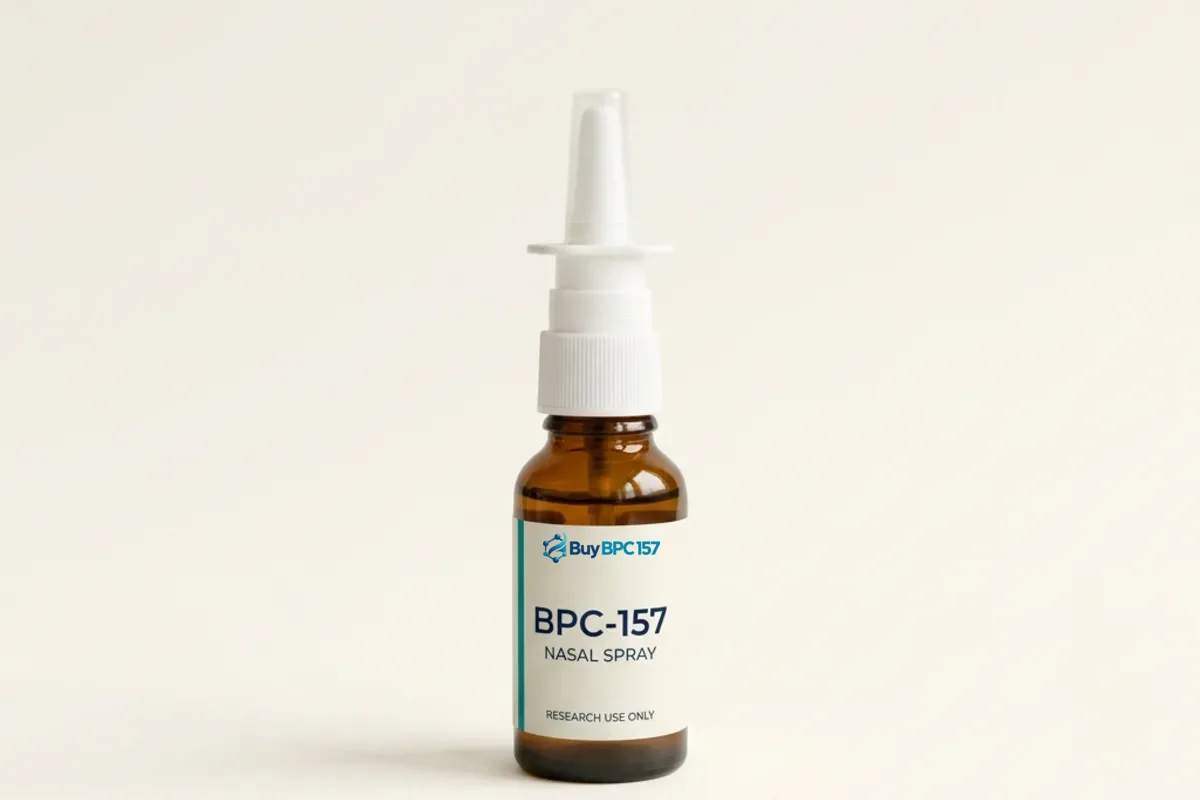
Metered spray · 10 mg per 10 mL bottle
Evaluate the liquid and the delivery device separately. Nominal bottle content does not establish the amount dispensed by a pump, stability or route-specific performance.
$56.50 Unverified illustrative price · Catalog only
COA required · ≥ 99% purity standard Proposed peptide standard, not verified liquid composition
COA available on request · No formulation or pump data verified
01 / Liquid and device
| Peptide | BPC-157, a 15-amino-acid peptide fragment |
|---|---|
| Sequence | Gly-Glu-Pro-Pro-Pro-Gly-Lys-Pro-Ala-Asp-Asp-Ala-Gly-Leu-Val |
| Formula | C62H98N16O22, peptide only |
| Molecular weight | Approximately 1419.5 g/mol |
| CAS | 137525-51-0 |
| Form | Liquid in a metered-spray bottle; formulation and device unverified |
| Nominal content | 10 mg in 10 mL; unverified placeholders, no output-per-actuation specification |
| Purity standard | Proposed ≥ 99% HPLC for peptide ingredient; unverified |
| Storage | Light-protected, formulation-specific laboratory storage; exact conditions pending |
02 / A complete formulation record
This proposed format combines a liquid preparation with a pump container. Neither the solvent system nor any preservative, buffer or stabilizer is verified. The amber glass in the image does not prove that the contents are stable under light exposure or that the pump delivers a consistent volume.
Nominal 10 mg in 10 mL would describe a mass-to-volume ratio if both quantities were confirmed. It says nothing about the liquid remaining in the pump, the output of individual actuations or performance over the container’s life. Those questions need device-specific measurements rather than a division of the bottle totals.
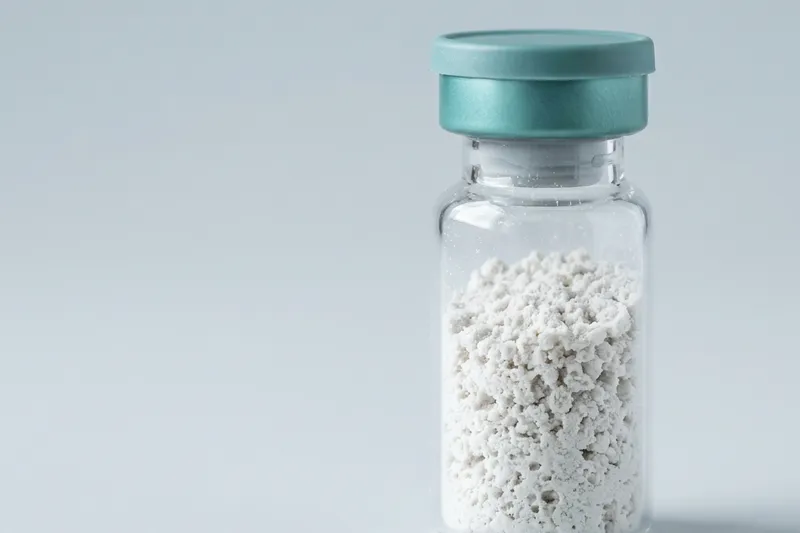
The powder illustration shows an analytical distinction: identifying a peptide ingredient is separate from characterizing a finished liquid. The vetting guide explains how to request records for both. No instructions for personal administration are provided, and this format is not presented as an established human-use route.
03 / Separate analytical questions
For a finished liquid, a raw-peptide certificate is a starting point rather than a complete material file. The final formulation requires an appropriate identity and content method, and the report should explain whether the sample came from bulk liquid or a filled bottle. Batch numbers need to connect those records.
Microbiological properties and preservation cannot be inferred from HPLC purity. The pump also introduces a separate measurement problem: an advertised metered format is not evidence of a verified output distribution. This listing claims neither validated pump performance nor a microbiological status.
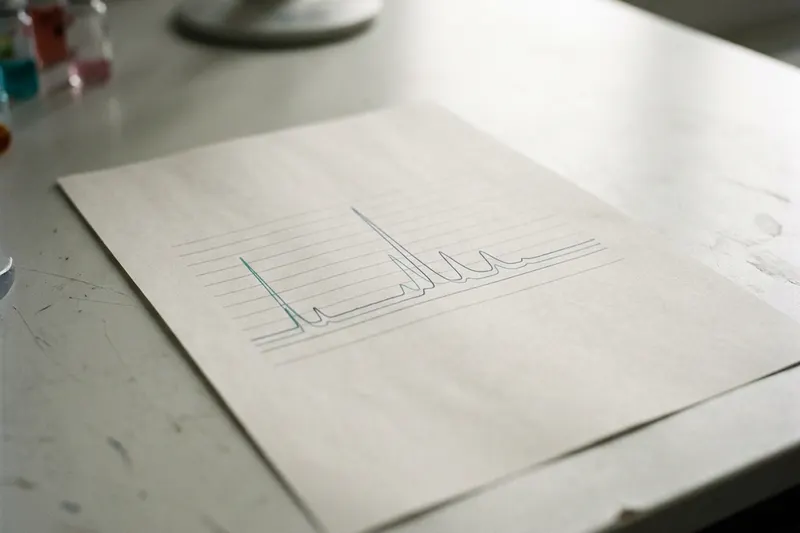
The quality requirements describe the standard we would require before considering a listing documented. Every visible numeric placeholder here remains unverified. The illustrative certificate is not an actual report for this bottle and does not substantiate any finished-format claim.
04 / Stability is formulation-specific
A prepared liquid presents different stability questions from a sealed lyophilized cake. Solvent composition, pH, container contact and repeated exposure can matter. Cold and light-protected handling is a general laboratory consideration, but it is not a validated storage instruction for this unconfirmed formulation.
No specific temperature, expiry or opening window is established. The material record should explain how stability was assessed and whether the data describe unopened bottles, opened bottles or a bulk preparation. A generic statement about peptide storage cannot bridge those different conditions.
Laboratories should maintain the original bottle identity and record handling under approved procedures. The calculator performs mass-and-volume arithmetic but cannot determine spray volume, pump consistency, preservation or the stability of the liquid. It is not a tool for choosing an administration amount.
05 / Do not borrow route evidence
Intranasal BPC-157 delivery research is thin compared with the wider preclinical literature. General discussion of intranasal peptide delivery does not establish the behavior of this peptide in this liquid or device. A route-specific claim would require a relevant study with characterized material, measured delivery and an appropriate experimental design.
Chang et al. (2011) studied rat tendon and fibroblast preparations, not a nasal spray. That paper cannot be used to substantiate a spray-format listing. Sikirić et al. (2018) discuss broader preclinical investigations, which likewise need to be read for their actual routes and preparations.
The research overview separates those model-specific observations from limited human evidence. BPC-157 is not FDA-approved for any use. Its regulatory status does not change because it appears in a spray bottle, and no route is presented here as appropriate for personal use.
Lyophilized powder · 5 mg
$38.50 Unverified illustrative price
COA required · ≥ 99% purity standard Proposed, unverified threshold
View product details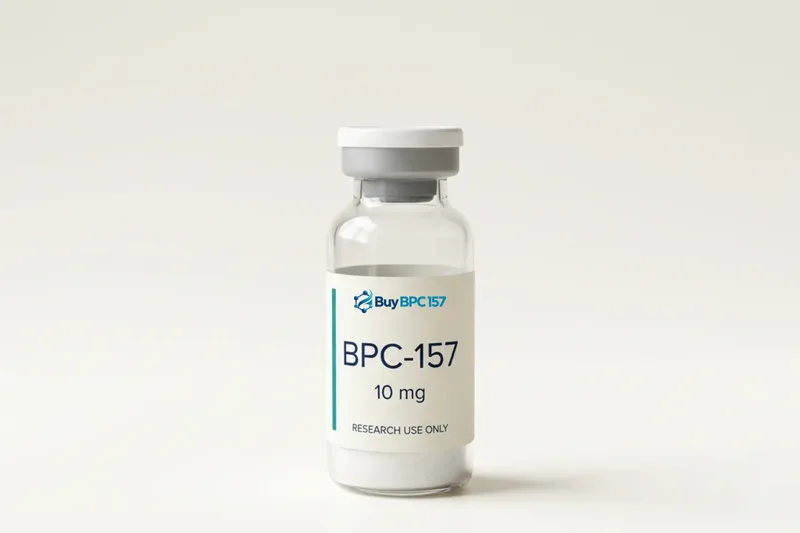
Lyophilized powder · 10 mg
$64.50 Unverified illustrative price
COA required · ≥ 99% purity standard Proposed, unverified threshold
View product details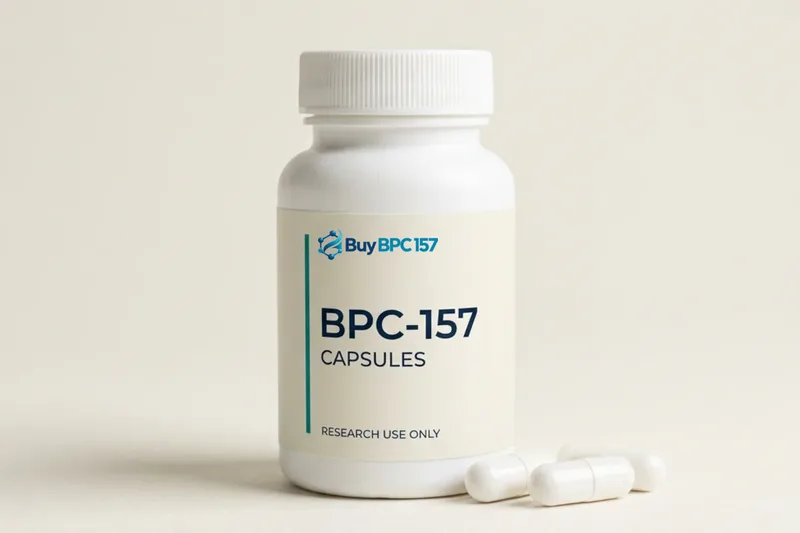
Capsules · 500 mcg × 60
$78.50 Unverified illustrative price
COA required · ≥ 99% purity standard Proposed, unverified threshold
View product details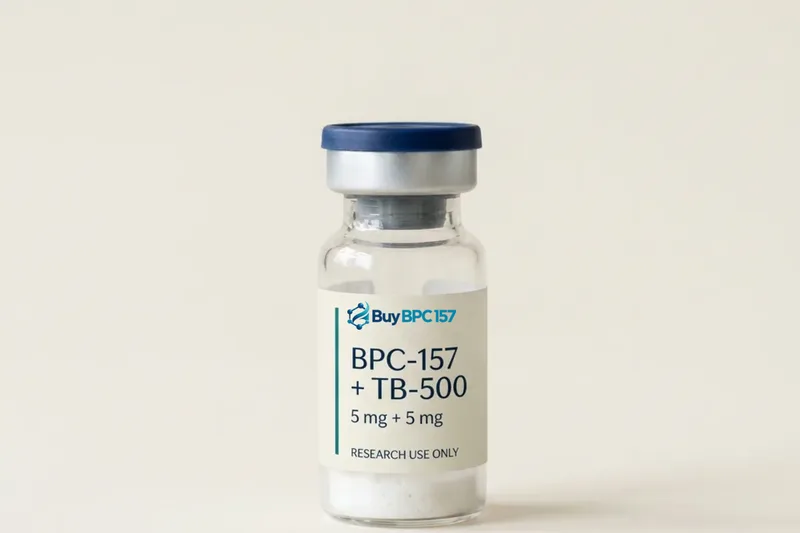
Lyophilized powder · 5 mg + 5 mg
$86.50 Unverified illustrative price
COA required · ≥ 99% purity standard Proposed, unverified threshold
View product detailsThe bottle total, liquid composition and device output are different specifications.
No. The 10 mL volume and 10 mg peptide content are visible placeholders. They are not a confirmed final specification. Analytical content, fill volume and container identity must be established before the nominal ratio can be treated as a documented property.
It names the proposed pump format. No volume per actuation or consistency measurement is verified. Actual device performance requires separate testing and cannot be inferred from the pump’s appearance or from dividing total content by an assumed spray count.
No sterility claim is made. Chemical purity does not establish microbiological properties. Any relevant method would require appropriate documentation for the actual finished preparation, not a raw-peptide certificate or a generic statement about laboratory materials.
The formulation is not confirmed, including any preservative or buffer. It would be misleading to assume either presence or absence. A complete composition statement is necessary for analytical compatibility and any assessment of formulation-specific stability.
No. Amber glass is a packaging feature, not a stability study. Evidence must concern the actual liquid, container and conditions. The image is illustrative and should not be interpreted as verified packaging for an available batch.
No. Chang et al. examined a defined experimental system involving rat tendon and fibroblasts. It was not an evaluation of this spray. Evidence from a different preparation or route cannot be transferred to the finished bottle by association.
No device output is verified, and the calculator is not a spray tool. It only converts entered mass and liquid volume into arithmetic quantities. It cannot establish delivery behavior, recommend an amount or validate a laboratory method.
Documentation should precede availability. Future notices would need confirmed formulation, bottle content and device information.
Research documentation
Compare batch identity, analytical methods and content documentation before evaluating a research format.
View quality standards